When Should You Consider a Mommy Makeover After Childbirth?

Prepared by:

Dr. Leonard Nenad Josipovic

Consultant Plastic Surgeon

Pregnancy is one of the most profound physical experiences a woman can undergo. It reshapes the body in ways that go far deeper than the visible changes you see in the mirror. And yet, once the dust settles — once the sleepless nights begin to ease and life finds a new rhythm — many women find themselves asking the same quiet question: when is it the right time to address what has changed?

A mommy makeover after childbirth is not a single procedure. It is a tailored combination of surgical and non-surgical treatments, designed to restore the body's contour and proportion following one or more pregnancies. The decision to pursue one is deeply personal, and the timing matters more than most people realise.

This guide is written to help you understand the medical reasoning behind that timing — not to rush you towards a decision, but to ensure that when you are ready, you are informed, confident, and moving at the pace that is right for you.

How Pregnancy Changes Your Body

Before considering any form of restoration, it helps to understand precisely what pregnancy does to the body. These changes are not cosmetic inconveniences. They are significant, structural, and — in many cases — irreversible without intervention.


The Abdominal Wall


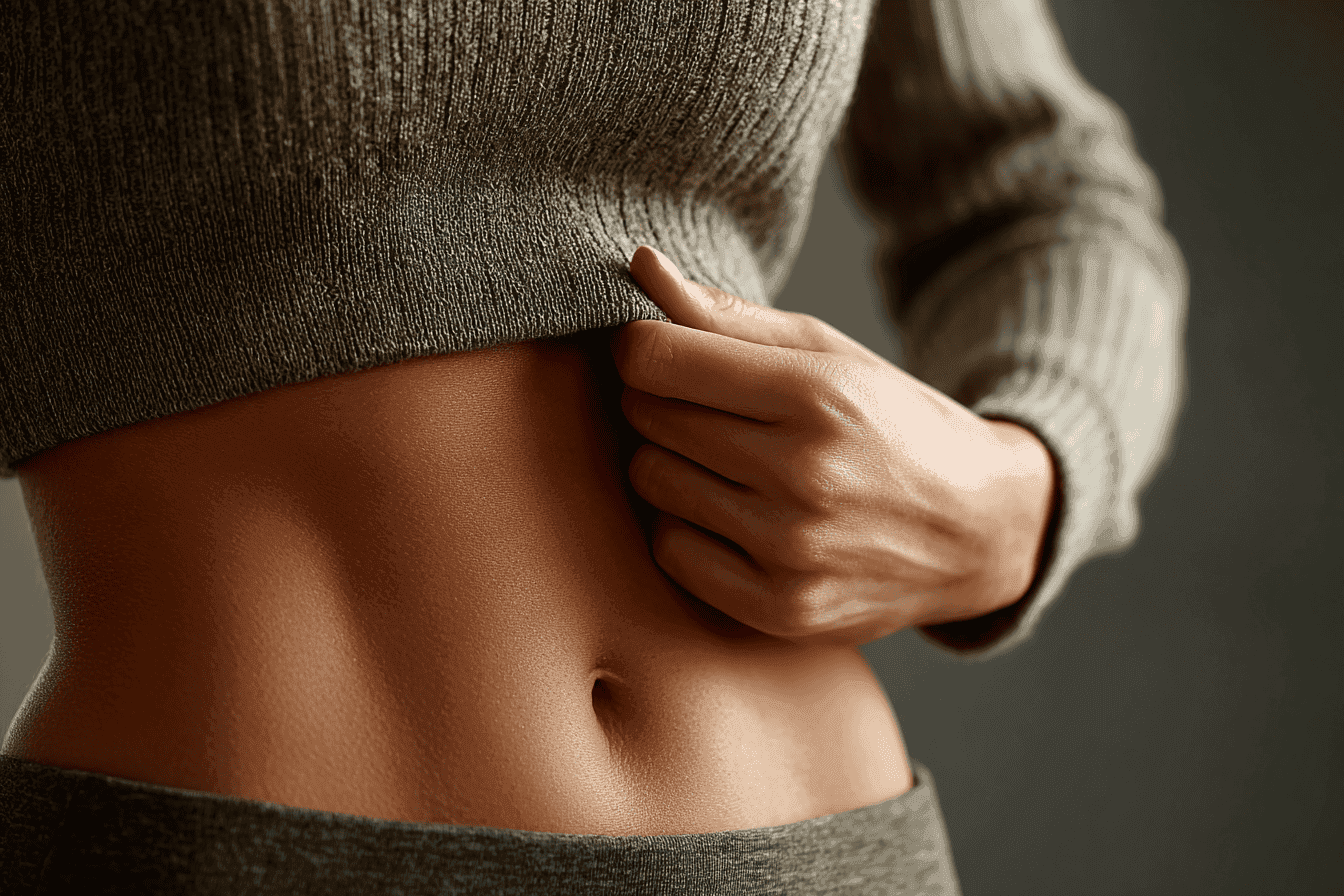
The abdomen bears the most visible toll. As the uterus expands, the two vertical bands of muscle that run down the centre of the abdomen — the rectus abdominis — are pulled apart to accommodate the growing baby. This separation is known as diastasis recti abdominis.

It is more common than many women expect. Postpartum muscle separation research published in Scientific Reports found that a significant proportion of women retain measurable separation well beyond the early postpartum period. Up to one-third of women still present with diastasis recti at twelve months after delivery, and clinical research confirms that in many of these cases, the separation does not resolve on its own. The result is a protruding lower abdomen that persists even when body weight has returned to its pre-pregnancy baseline — and it is not something that diet or exercise alone can correct.


Breast Changes After Pregnancy


The breasts undergo equally significant shifts. During pregnancy and lactation, hormonal fluctuations cause the tissue to expand and contract repeatedly. Once breastfeeding ends, the skin and internal tissue do not always return to their former volume or shape. Sagging — clinically referred to as ptosis — is common, particularly in women who have breastfed for an extended period or experienced multiple pregnancies. These changes are structural, and they are permanent without surgical or advanced aesthetic intervention.


Skin and Fat Distribution


Pregnancy hormones also alter the way the body stores fat. Even after returning to a healthy weight, many women notice new deposits in areas such as the lower abdomen, flanks, or thighs that do not respond to conventional exercise or dietary adjustment. Simultaneously, the rapid stretching and contraction of skin during pregnancy can lead to lasting laxity — particularly across the abdomen and chest — along with stretch marks that fade but rarely disappear entirely.


When Is It Safe to Consider a Mommy Makeover After Childbirth?

Timing is the single most important factor in achieving safe, lasting results. Proceeding too early — before the body has fully stabilised — increases both surgical risk and the likelihood that results will not hold.


The 6–12 Month Rule


The general medical consensus is clear on this point. Board-certified surgeons advise a minimum of six months after delivery before considering any invasive body contouring procedure. Many recommend waiting closer to twelve months. The reasoning is straightforward: the body needs time to heal internally, for hormonal levels to normalise, and for tissue to settle into its post-pregnancy state.

Weight stability is equally critical. A mommy makeover is a body contouring procedure — not a weight loss tool. Surgeons will typically ask that you have maintained a consistent weight for at least three to six months before proceeding. Fluctuations after surgery can compromise the results and, in some cases, necessitate revision.


If You Are Still Breastfeeding


Breast surgery — whether a lift, augmentation, or reduction — should not be considered while you are actively breastfeeding. The tissue continues to change throughout lactation, and operating on a breast that is still producing milk increases both surgical complexity and the risk of complications. The recommendation is to wait a minimum of three months after weaning has fully ceased before consulting a surgeon about any breast procedure.


Are You Finished Having Children?


This is a question worth considering honestly. Each subsequent pregnancy will stretch the abdominal skin and muscle again, and may reduce the effectiveness of previous surgical results. While it is entirely possible to have a successful pregnancy after a mommy makeover, many surgeons will gently encourage you to wait until your family is complete before undertaking the procedure.


Signs You May Be Ready

Beyond the medical timelines, there are quieter signals that indicate readiness — both physical and emotional.


Physical Indicators


Your weight has been stable for several months. You have given your body adequate time to heal from delivery. If you were breastfeeding, you have fully weaned and allowed at least three months to pass. You have explored diet and exercise, and certain areas of your body have simply not responded.


Emotional Clarity


Readiness is not only physical. It is also about arriving at the decision from a place of clarity rather than urgency. The postpartum period can be emotionally turbulent. If you find that your motivation is rooted in a settled, considered desire to feel more like yourself again — rather than a reaction to a difficult moment — that is a meaningful indicator that you are approaching this decision from the right place.


What Does a Mommy Makeover Typically Include?

A mommy makeover is not a standardised procedure. It is a bespoke combination of treatments, selected based on your individual anatomy, goals, and medical assessment. That said, there are several procedures that are commonly included.


Abdominoplasty


Abdominoplasty — commonly known as a tummy tuck — addresses both the excess skin of the lower abdomen and the underlying muscle separation caused by pregnancy. It is the most frequently performed component of a mommy makeover, and it forms the foundation of postpartum abdominal restoration for many women.


Breast Lift


A breast lift repositions the breast tissue and tightens the surrounding skin to restore a fuller, more defined shape. It may be performed alongside augmentation or reduction, depending on the individual's goals and anatomy. The procedure is particularly relevant for women who have experienced significant volume loss following breastfeeding.


Can Multiple Procedures Be Safely Combined?


One of the most common questions is whether several procedures can be performed in a single session. In many cases, yes. Combining procedures reduces recovery time compared to staging them separately, and when performed by an experienced surgeon, the approach is considered safe. However, the decision to combine is always made on a case-by-case basis, following thorough medical assessment and consultation. Your surgeon will advise on what is appropriate for your specific situation.


Non-Surgical Alternatives Worth Considering

Not every woman is looking for surgery — and not every concern requires it. For those who prefer a less invasive route, or who wish to complement a surgical plan with additional treatments, a number of advanced non-surgical options are now available.


EmSculpt NEO


EmSculpt NEO uses high-intensity focused electromagnetic energy combined with radiofrequency to simultaneously strengthen abdominal muscles and reduce localised fat. It is particularly well suited to women who have experienced muscle weakening during pregnancy and wish to rebuild tone without surgery. The treatment requires no downtime and is typically delivered over a series of sessions.


CoolSculpting


CoolSculpting targets stubborn fat deposits — the kind that persist despite a healthy weight and regular exercise — by cooling them to a temperature that triggers natural cell death. The fat cells are then processed and eliminated by the body over the following weeks. It is a well-established, non-invasive option for refining body contour in specific areas such as the lower abdomen or flanks.


Stretch Mark Treatment


Stretch marks are among the most common postpartum concerns, and while they rarely disappear entirely, advanced treatments can significantly improve their appearance. Combining modalities such as microneedling and laser therapy helps to remodel the skin and stimulate new collagen production, gradually softening the marks over time.


Planning Your Journey

Deciding to explore a mommy makeover after childbirth is not a commitment — it is a starting point. The process begins long before any procedure takes place.


What to Expect from a Consultation


A comprehensive medical consultation is the first and most important step. During this appointment, your surgeon will assess your anatomy in detail, discuss your goals, review your medical history, and explain which procedures — if any — are appropriate for you. There is no obligation to proceed, and the consultation itself is designed to ensure that any decision you make is fully informed and medically justified.


How to Prepare


In the weeks leading up to your consultation, it may help to have a clear sense of your own goals. Think about which areas of your body concern you most, and what outcome would make you feel most like yourself. This is not about perfection. It is about restoring a sense of alignment between how you feel and how you present to the world.

It is also worth arriving at the consultation with an honest picture of your lifestyle. Your surgeon will want to understand your activity levels, your long-term health goals, and whether you plan to maintain a stable weight going forward. The more clearly you can articulate where you are now — and where you would like to be — the more precisely your treatment plan can be tailored.

If you are considering a combination of surgical and non-surgical treatments, do not feel that you need to decide in advance which route to take. The consultation is precisely the space in which that decision is made — guided by medical assessment, not assumption.


Recovery and Realistic Expectations


Recovery timelines vary depending on the procedures chosen. Abdominoplasty, in particular, requires a longer healing period — typically two to three months before full activity can resume. Non-surgical treatments, by contrast, involve little to no downtime. Your medical team will walk you through every stage of recovery in detail before you commit to anything.



Conclusion

A mommy makeover after childbirth is not about reverting to a previous version of yourself. It is about ensuring that the body you live in reflects the woman you have become. The decision deserves patience, medical guidance, and clarity — and the timing deserves just as much attention as the procedure itself.

When you are ready to explore your options, the right starting point is a personalised medical consultation. At Seline Clinic Dubai, treatment pathways are designed around individual anatomy, clinical evidence, and long-term results. There is no pressure, no obligation — only a thorough assessment by qualified physicians who understand that this decision is yours to make, at the pace that suits you.

Schedule your consultation with our medical team today.