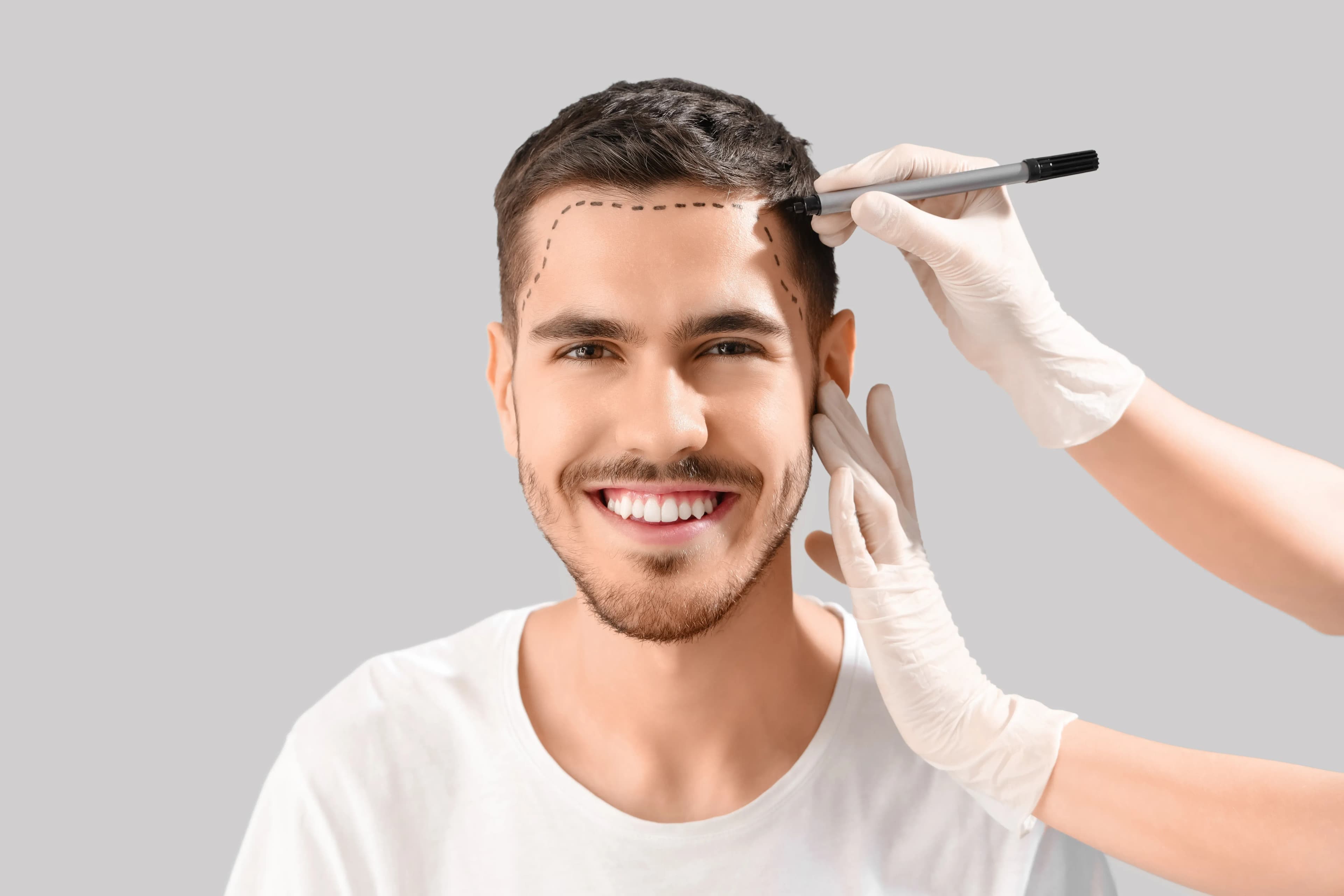
What exactly is an endoscopic face lift? It's an innovative, minimally invasive facelift that subtly corrects the signs of aging without excessive skin tension or visible scars. The beauty of this procedure lies in its ability to preserve the natural volume and structure of your face. Your face will look refreshed, youthful, and completely natural!
The primary goal of the endoscopic face lift is to redefine facial contours and rejuvenate your appearance by reducing sagging skin and smoothing out wrinkles. Unlike traditional methods, endoscopic facial rejuvenation doesn't involve removing excess skin. Instead, it gently redistributes volume and restores tissues to their original position. Using an endoscope with a monitor inserted through tiny incisions in the scalp, our specialists perform the procedure with precision and care.
- Endoscopic forehead lift is the most commonly applied surgery, targeting the forehead, eyebrows, and temples to address sagging skin, deep wrinkles, and volume loss. The result? A completely rejuvenated look with lifted eyebrows, a fresh, open expression, and smooth skin;
- Endoscopic midface lift. Focuses on the middle part of the face - lifting the corners of the mouth, smoothing wrinkles, reducing nasolabial folds, and restoring volume without disrupting your natural facial expressions.
- The lower face can also benefit from endoscopic cosmetic surgery, particularly for those looking to eliminate ptosis of chin tissues and loose jowls. Additionally, endoscopic facial contouring redefines the jawline.
Benefits of the Procedure
The key benefit of endoscopic lifting is its atraumatic nature, ensuring minimal disruption to the skin and tissues. The use of an endoscope with a monitor allows the surgeon to work with incredible precision, providing a clear view of the subcutaneous layers.
Guaranteed benefits of the procedure include:
- Quick results that last for many years;
- Lifting drooping eyebrows (endoscopic brow lift) and the corners of the mouth, achieving an “open” and youthful look;
- Smoothing forehead wrinkles and crow’s feet;
- No visible scars or marks due to the minimally invasive approach.
How to Prepare for the Procedure?
As with any surgical procedure, proper preparation is crucial. Comprehensive diagnostic tests are conducted to rule out any contraindications. Both the surgeon and anesthesiologist will work together to select the best treatment plan and anesthesia method for you. If any imbalances are discovered in your tests, corrective medications will be prescribed to ensure your body is fully ready for the procedure, however small it may be.
Who is a Good Candidate for the Procedure?
The endoscopic facelift is perfect for those who wish to enhance their appearance without undergoing a full facelift. It’s a minimally invasive procedure that offers noticeable results with minimal impact on the body. Ideal for anyone looking to restore a youthful look, this procedure effectively lifts sagging tissues, rejuvenates the eyebrows and corners of the mouth, eliminates a double chin, and refines the contours of the face. It’s the ideal choice for those seeking a natural, refreshed appearance with subtle yet powerful transformations.
Risks and Contraindications
The risks of an endoscopic facelift are minimal when performed by a skilled surgeon, but it’s important to be mindful of any contraindications. Some are relative, meaning the procedure can become possible once the underlying condition is resolved. However, absolute contraindications make endoscopic lifting impossible.
Relative contraindications include:
- Pregnancy or breastfeeding;
Absolute contraindications include:
- Blood clotting disorders;
- Heart and vascular diseases;
- A tendency to the formation of keloid scars.
Potential complications after surgery:
- Bleeding due to fluctuations in blood pressure from anesthesia;
- Swelling, hematomas, and bruising are experienced by almost all patients. This condition is a natural bodily response, requiring no correction and typically resolving on its own;
- Suture inflammation is sometimes a normal occurrence when the surgery has been successful. However, if you notice increased pain or a rise in temperature, it is important to consult a doctor as it may indicate the development of an infection;
- Keloid scars may develop in individuals who are predisposed to them;
- Tissue necrosis is an extremely rare complication that may occur in patients with chronic conditions, obesity, or those prone to unhealthy habits.
Post-Treatment Care
The recovery process occurs in stages:
- In the first few days after the surgery, there may be some discomfort, which can be alleviated with pain-relieving medications;
- On days 3-5, swelling and bruising may increase, but they gradually subside by days 10-14;
- After 30 days, the healing process is fully completed.
Post-procedure recommendations include:
- Avoiding tanning beds, saunas, and swimming pools;
- Staying out of direct sunlight;
- Refraining from pulling or coloring your hair in the treated areas, and opting for simple hairstyles;
- Avoiding exercise and other physical activities.
It’s also important to follow all the doctor’s recommendations and take any prescribed medications.