Tummy Tuck Scar: Where It Sits, How It Heals and How to Minimise It

Most people who ask about a tummy tuck scar already know there will be one. What they want to know is how long it will be, where it will sit, whether it will show in underwear or swimwear, and how noticeable it may become over time.

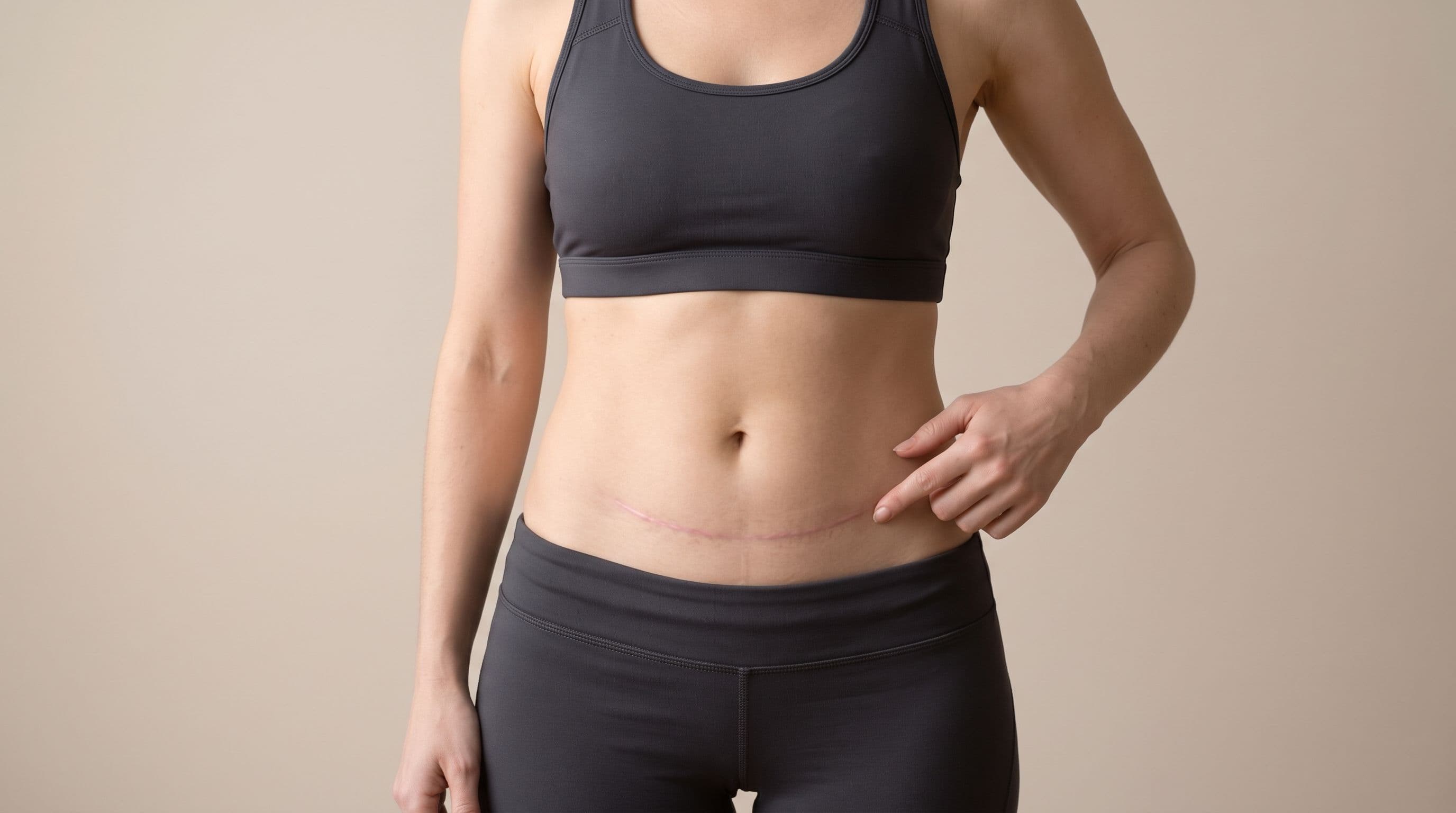
A tummy tuck scar is usually a horizontal scar placed low on the abdomen, often between the hip bones and below the underwear line. A full tummy tuck also usually leaves a second scar around the belly button.

The scar does not disappear, but it usually becomes flatter, softer and less noticeable as it matures. Scar maturation commonly continues for 12 to 18 months and sometimes longer.

At Seline Clinic in Jumeirah, Dubai, scar position is planned during consultation as part of the tummy tuck procedure itself, taking your anatomy, the amount of skin being removed and the clothing you usually wear into account.

This article explains where different tummy tuck scars sit, how long they may be, how they change during healing and what may help them settle.

What Is a Tummy Tuck Scar, and Why Is It Needed?

A tummy tuck scar is the line that forms where the surgeon removes excess skin and closes the abdominal incision.

A tummy tuck, also called abdominoplasty, removes loose abdominal skin, may include repair of separated abdominal muscles, and reshapes the lower abdomen. Because skin is removed and repositioned, an incision and permanent scar are unavoidable.

Surgery can influence where the scar is positioned and how the incision is closed. It cannot remove the scar altogether or predict exactly how an individual patient's skin will heal.

Scar planning therefore begins before the first incision.

If your main concern is excess fat rather than loose skin, liposuction Dubai may be considered instead. Liposuction uses much smaller incisions but does not remove significant excess skin.

Our article Liposuction or Tummy Tuck: Which One Do You Actually Need? explains how the two procedures differ.

Where Does the Tummy Tuck Scar Sit?

The position and length of a tummy tuck scar depend on how much skin needs to be removed and where the excess skin is located.

Different tummy tuck techniques therefore leave different scar patterns.

For more detail on the procedures themselves, see Types of Tummy Tuck: Mini, Full and Extended.

Full tummy tuck scar

A full tummy tuck usually leaves a long horizontal scar low across the abdomen, commonly extending from one hip area to the other.

The surgeon generally plans the incision so that it can be concealed by many styles of underwear and swimwear where anatomy allows.

During a full tummy tuck, the navel is usually brought through a new opening in the abdominal skin, leaving an additional scar around the belly button.

Mini tummy tuck scar

A mini tummy tuck usually leaves a shorter horizontal scar than a full tummy tuck.

Its position may be similar to a caesarean section scar, although the length depends on how much skin needs to be removed.

The belly button usually remains in its existing position, so a separate scar around the navel is generally not required.

A mini tummy tuck mainly treats loose skin below the belly button, which means it is suitable for fewer patients than the name may suggest.

Extended tummy tuck scar

When loose skin extends around the sides of the abdomen and flanks, an extended tummy tuck may require a scar that continues beyond the front of the abdomen and around the sides of the hips.

The scar is longer because the procedure removes and tightens skin across a wider area.

Broader body-contouring procedures are covered on our body surgery page.

Fleur-de-lis scar

Some patients with substantial excess skin, particularly after major weight loss, may require a fleur-de-lis abdominoplasty.

This creates a vertical scar down the centre of the abdomen in addition to the lower horizontal scar.

The vertical scar is more visible, so this technique may be recommended when a horizontal excision alone would not adequately address the excess skin.

Belly button scar

A full or extended tummy tuck usually creates a scar around the navel.

The shape and position of the belly button are important because the navel sits in the centre of the abdomen and can influence how natural the overall result appears.

How Long Is a Tummy Tuck Scar?

The length of a tummy tuck scar depends mainly on the amount and distribution of excess skin.

A mini tummy tuck generally leaves a shorter low abdominal scar.

A full tummy tuck commonly requires a longer scar extending across the lower abdomen.

An extended tummy tuck may continue around the flanks, while a fleur-de-lis procedure adds a vertical scar.

A shorter scar is not automatically better if it prevents the surgeon from removing enough loose skin or creating the planned abdominal contour.

Your surgeon can estimate the likely scar length after examining your abdomen and discussing the appropriate surgical technique.

How Is the Scar Planned Before Surgery?

The surgeon usually marks the planned scar with you standing before surgery.

Its position can then be assessed in relation to your natural abdominal folds and the type of underwear or swimwear you normally wear.

Planning may take into account:

  • Clothing line: the incision is planned as low as safely possible while achieving the required correction
  • Skin to be removed: greater skin excess often requires a longer incision
  • Symmetry: both sides are planned carefully while allowing for natural anatomical differences
  • Previous scars: an existing caesarean section scar may sometimes be incorporated into the new scar
  • Stretch marks: stretch marks located on skin that is removed may also be removed, while those outside the excised area will remain

If scar position is particularly important to you, bring the style of underwear or swimwear you commonly wear to your consultation.

If you are considering a mommy makeover, the position of scars from different procedures can be considered together as part of the surgical plan.

How Does a Tummy Tuck Scar Heal?

A tummy tuck scar changes significantly during the months after surgery.

Healing varies between patients, but a general pattern may include:

  • First weeks: the wound closes and the incision line may appear pink, red or slightly raised
  • First three months: the scar may become firmer, redder or more noticeable as collagen forms and the tissues heal
  • Three to six months: redness and firmness may gradually begin to settle
  • Six to twelve months: the scar often becomes flatter, softer and lighter
  • Twelve to eighteen months: scar maturation continues and the final appearance becomes clearer

Some scars continue changing for longer.

Scars therefore need to be judged over months rather than during the early weeks after surgery.

The tummy tuck scar after one year

After approximately one year, many tummy tuck scars are flatter, softer and lighter than they were during the early stages of healing.

Some scars may still retain pink, red or darker pigmentation and continue changing beyond one year.

For this reason, decisions about elective scar revision are often postponed until the scar has had sufficient time to mature unless there is a specific medical reason to intervene earlier.

Tummy tuck scar before and after healing

During early healing, a tummy tuck scar may look pink or red and may feel firm, tight or itchy.

As the scar matures, it often becomes flatter, softer and less noticeable.

It will still remain visible on close inspection.

Every person heals differently, so photographs of another patient's tummy tuck scar cannot predict exactly how your own scar will look.

What Affects How Your Tummy Tuck Scar Looks?

The final appearance of a tummy tuck scar depends partly on the surgical technique and partly on how your tissues heal.

Some factors can be influenced, while others cannot.

  • Tension: excessive strain on a healing incision may contribute to scar widening
  • Genetics and skin characteristics: some people are more likely to develop hypertrophic or keloid scars
  • Skin pigmentation: skin type and pigmentation can influence how noticeable redness or colour changes remain during healing
  • Smoking and nicotine: nicotine reduces blood flow to healing tissues and increases the risk of wound-healing problems
  • Wound complications: infection, delayed healing or fluid collections may affect the final scar
  • Sun exposure: ultraviolet exposure can make a healing scar darker and more noticeable
  • Weight changes: significant weight gain or loss after surgery may stretch or alter the position of abdominal tissues and the scar

Smoking, nicotine use, blood-thinning medicines and supplements should be discussed before surgery.

Never stop a prescribed medicine without speaking to the doctor who prescribed it or your surgical team.

How to Minimise a Tummy Tuck Scar

The most important scar care is following your surgeon's aftercare instructions and protecting the healing incision, particularly from tension and sun exposure during the first year.

Your surgeon will tell you when each stage of scar care is safe to begin.

Common recommendations may include:

  • Wound care: keep the incision clean and follow your dressing instructions
  • Limit strain: avoid heavy lifting and strenuous exercise until your surgeon clears you
  • Compression garment: wear it as instructed to support the healing tissues
  • Silicone gel or sheets: these are commonly used once the wound has fully healed to help selected scars become softer and flatter
  • Sun protection: keep the scar covered where possible and use appropriate high-factor sun protection once the wound has healed
  • Avoid smoking and nicotine: follow your surgeon's instructions before and after surgery
  • Stable weight: maintaining a relatively stable weight may help preserve the position of the scar and abdominal contour

In Dubai, year-round UV exposure makes sun protection particularly important during scar maturation.

Tummy Tuck Scar Treatment Options

If an abdominoplasty scar remains raised, wide, red or uneven after healing, different tummy tuck scar treatments may be considered.

No treatment can completely erase a surgical scar.

The appropriate option depends on the type of scar, its maturity, your skin and how the area has healed.

Silicone gel or sheets

Silicone products are commonly used after surgical wounds have fully closed.

They may help soften or flatten selected scars and are usually used consistently over a period of time according to medical advice.

Steroid injections

Steroid injections may be considered for selected hypertrophic or keloid scars that remain raised, thick or itchy.

More than one treatment session may be required.

Laser treatment

Different laser or light-based treatments may be considered to address persistent redness, pigmentation or selected scar characteristics.

The choice of treatment depends on the scar and your skin type.

Microneedling

Microneedling may be considered for selected mature scars after medical assessment.

It may help improve texture in some patients, for example with SkinPen microneedling, but it is not appropriate for every scar or every stage of healing.

Scar revision surgery

Surgical scar revision may be considered when a scar is unusually wide, poorly positioned or has healed unfavourably.

Revision is generally considered after the scar has matured unless there is a reason to intervene sooner.

Non-surgical scar treatments are available within Seline's aesthetic medicine services, allowing scar assessment and treatment to continue after surgery where appropriate.

What scar treatment can and cannot do

Scar treatment may make a scar flatter, softer, smoother or closer to the surrounding skin tone.

It cannot erase the scar completely.

Changing the position of a scar generally requires further surgery.

When Should You Contact Your Surgeon?

Some redness, swelling and firmness around a healing tummy tuck incision can be normal, particularly during the early recovery period.

However, certain changes require medical review.

Contact your surgical team if you notice:

  • Increasing or spreading redness
  • Increasing warmth around the incision
  • Wound discharge
  • An opening along the incision
  • An area that is not healing as expected
  • New or increasing fluid-filled swelling
  • Fever
  • Pain that is worsening rather than settling
  • A scar that continues growing beyond the original incision line

Like any major operation, tummy tuck surgery carries risks.

These may include bleeding, haematoma, infection, seroma, delayed wound healing, changes in sensation, abdominal asymmetry, anaesthetic complications and blood clots.

Scar-related risks include widened scars, hypertrophic scars, keloid scars and small folds of skin at the ends of the incision, sometimes called dog ears, which may occasionally require revision.

Your surgeon should discuss the risks relevant to your health and surgical plan before you consent to surgery.

How Much Does Tummy Tuck Scar Treatment Cost?

Scar treatment or surgical scar revision is quoted after the scar has been assessed.

The cost depends on factors such as:

  • Scar size
  • Scar type
  • Treatment selected
  • Number of treatment sessions
  • Whether surgical revision is required

For patients researching tummy tuck surgery in Dubai, Seline Clinic currently lists the following starting prices:

  • Abdominoplasty: from AED 45,000
  • Mini abdominoplasty: from AED 30,000
  • Lipoabdominoplasty: from AED 55,000

These are indicative starting prices rather than final quotations.

Your final surgical plan and price are confirmed after medical assessment.

Current procedure prices are available on the Seline Clinic prices page.

Tummy Tuck Surgery in Dubai: Regulation and Privacy

Healthcare professionals and facilities practising within Dubai Health Authority jurisdiction are subject to local licensing and regulatory requirements.

Consultations at Seline Clinic are private.

Patients travelling to Dubai from elsewhere in the UAE, the GCC or internationally should discuss the required length of stay and follow-up schedule with their surgical team before booking travel.

Why Choose Seline Clinic Dubai for Tummy Tuck Surgery?

Seline Clinic is a multidisciplinary aesthetic, plastic surgery and wellness clinic in Jumeirah, Dubai.

Tummy tuck consultations are provided by Seline's plastic surgery team, including:

For patients who prefer a female surgical environment, Dr. Maria Rubatti, Specialist Plastic Surgeon, MD, offers a fully female surgical team, including a female surgeon, anaesthesia team and nurses.

Surgical procedures take place in accredited surgical facilities.

Consultation and follow-up care are provided at Seline Clinic on Jumeirah Street.

Frequently Asked Questions Tummy Tuck Scar

Will my tummy tuck scar ever disappear?

No.

A tummy tuck scar is permanent, although it usually becomes flatter, softer and less noticeable as it matures.

Scar maturation often continues for 12 to 18 months and sometimes longer.

Can a tummy tuck scar be hidden under underwear or a bikini?

In many patients, the scar can be positioned low enough to remain under common styles of underwear or swimwear.

However, very low-rise or high-cut styles may reveal part of the scar.

If scar placement is important to you, show your surgeon the style of clothing you normally wear during consultation.

When can I start using silicone on my tummy tuck scar?

Silicone gel or sheets are generally used only after the incision has fully closed and your surgical team confirms that the wound has healed sufficiently.

Do not apply scar products to an open or incompletely healed wound unless specifically instructed.

Why is my tummy tuck scar red or raised?

A healing scar can appear pink, red, firm or slightly raised during the first months after surgery as collagen forms and remodels.

This may gradually settle as the scar matures.

A scar that becomes increasingly raised, painful, itchy or extends beyond the original incision should be assessed because hypertrophic or keloid scarring may require treatment.

Does pregnancy after a tummy tuck affect the scar?

Pregnancy stretches the abdominal wall and skin again.

This may widen or change the position of the scar and may also affect the abdominal contour or muscle repair achieved during surgery.

If you are planning another pregnancy, discuss timing with your surgeon.

Our article When Should You Consider a Mommy Makeover After Childbirth? discusses timing in more detail.

Is a mini tummy tuck scar always the better choice?

No.

Although a mini tummy tuck usually leaves a shorter scar, it mainly treats loose skin below the belly button.

If there is significant loose skin above the navel, a full tummy tuck may provide a more appropriate correction despite requiring a longer scar.

Our tummy tuck in Dubai article explains the different surgical approaches.

A Well-Placed Scar Is Part of a Good Result

A tummy tuck always leaves a scar.

Its position, length and final appearance depend on the type of operation, the amount of skin being removed and how your tissues heal.

Careful surgical planning can position the scar as discreetly as anatomy allows, while appropriate aftercare may help it mature as favourably as possible.

The scar is part of the trade-off involved in removing excess abdominal skin and improving abdominal contour.

To arrange a private tummy tuck consultation in Dubai, call +971 800 735463 or contact Seline Clinic through WhatsApp.

Seline Clinic

623 Jumeira St, Umm Suqeim 1, Dubai

Download the app

Download
Seline Clinic mobile app on a smartphone